
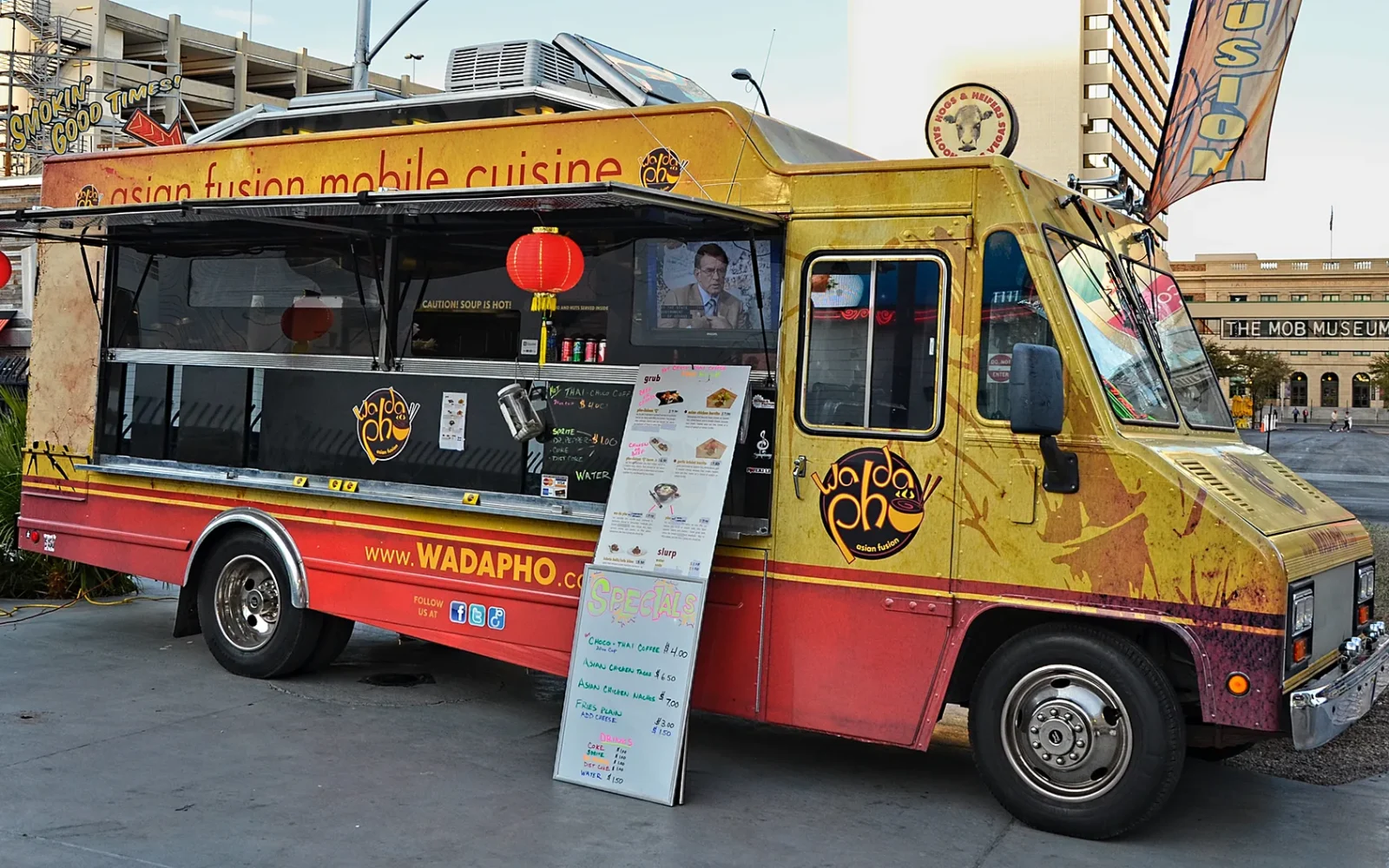
Las Vegas dining cannot be explained by one signature dish. The city’s food culture grows from hospitality labor, migration, entrepreneurship, neighborhood demand, and the constant exchange between formal dining rooms and everyday counters. The resort corridor is part of that story, but it is not the whole table. Looking beyond it reveals a valley of bakeries, markets, family restaurants, specialist kitchens, late-night gathering places, and ambitious independent rooms.
A good food plan does not chase a supposedly secret local scene. It chooses a neighborhood, learns what is concentrated there, and leaves enough time to eat with attention.
Think in corridors and communities
Spring Mountain Road and nearby streets are often described as Las Vegas Chinatown, but the dining landscape is broader than that name suggests. Restaurants and businesses represent many East and Southeast Asian cuisines alongside other traditions. The area extends across multiple shopping centers and intersections, so it functions as a corridor rather than one ornamental gate or compact pedestrian quarter.
Downtown and the 18b Arts District offer another pattern: restaurants, bars, coffee shops, bakeries, and creative businesses fit into older storefronts, converted commercial spaces, and newer developments. Other parts of the east, west, and southwest valley hold destination restaurants and community staples that may be far apart. Map travel time honestly, especially when a meal sits across the valley from the day’s main activity.
Build the meal around what matters
- Choose a cuisine or preparation you genuinely want to understand, not a social-media checklist.
- Check the restaurant’s own current information for service details, reservations, accessibility, and dietary questions.
- Group nearby stops instead of spending the day crossing the valley for isolated bites.
- Leave room for a bakery, market, or coffee stop that shows another side of the neighborhood.
- Ask before making close photographs of staff, diners, or food preparation.
Read craft at more than one scale
Restaurant craft is visible in small decisions: the texture of dough, the balance of a broth, careful knife work, a well-managed grill, a pastry case, a house-made condiment, or the timing that lets several plates reach a table together. It is also present in less visible systems such as sourcing, prep, cleaning, dishwashing, and service. Treating only a dramatic final plate as creative labor misses most of what makes a kitchen work.
When a restaurant explains a regional style or family history, use its own language rather than imposing a generic label. Similar-looking dishes can carry different ingredients, techniques, and meanings. If you are unfamiliar with a menu, a concise, respectful question is usually more useful than pretending expertise. Staff may not have time for a long lesson during a busy service, so read available descriptions first.
Make room for Las Vegas timing without romanticizing it
The city’s entertainment and hospitality economy creates demand across unusual work patterns. That helps explain why meals after performances, shifts, or events matter to many people. Still, do not assume every neighborhood kitchen operates late or that published details remain unchanged. Confirm current information directly, and keep a backup plan that does not require a rushed cross-town journey.
A meal before a show needs more margin than the map may imply. Large properties can take time to enter and navigate, while event traffic can alter an otherwise simple route. A meal after an activity should account for the group’s energy and transportation. The most enjoyable plan often has fewer stops and more breathing room.
Balance celebrated rooms with ordinary places
Las Vegas supports high-profile chefs and elaborate dining rooms, but prestige is not the only measure of a useful meal. A focused lunch counter, neighborhood bakery, grocery food court, or long-running family operation can reveal how residents eat and gather. Avoid calling a place authentic merely because it is inexpensive, informal, or outside the resort corridor. Authenticity is not a style category, and value judgments can reduce people and communities to travel props.
Likewise, do not frame every independent restaurant as an undiscovered find. Many have established customers and do not need a visitor to validate them. Describe what the kitchen makes, where it sits, and why it fits the trip. That is both more accurate and more useful.
Still comparing Food Tours?
Ask for tour ideas, hotel suggestions, or a simple trip plan that combines both.
Trip Helper
Order with curiosity and practical care
Review dietary needs before arriving, particularly when sauces, broths, shared fryers, or cross-contact may be relevant. A cuisine label alone cannot confirm ingredients or preparation. Ask the restaurant directly and accept that some kitchens may not be able to accommodate every requirement. For groups, ordering several compatible dishes can create variety without turning the table into a wasteful tasting challenge.
Alcohol may be part of Las Vegas dining, but it does not need to define the evening. Thoughtful nonalcoholic drinks, tea, coffee, and dessert can provide their own progression. Plan safe transportation and remember that desert dryness can make hydration easy to overlook.
Use food to connect the city’s layers
Pairing meals with nearby places produces a richer mental map. A Spring Mountain dinner can follow a museum or gallery visit. A Downtown meal can sit between sign history and a performance. A west-valley stop can follow Red Rock without treating either experience as a disposable backdrop for the other.
The goal is not to prove that the real Las Vegas exists somewhere beyond the Strip. The resort corridor and the neighborhoods depend on overlapping networks of workers, suppliers, visitors, and ideas. Eating across the valley makes those connections more visible. See the finished room, then notice the craft and community that keep the city fed.